
Previous Years
Office of the State Archaeologist annual reports from 2010 through the last fiscal year are archived in the University of Iowa Digital Library. They are viewable in PDF format.
FY2026 OSA Annual Report
Navigate to:
WHO WE ARE
BY THE NUMBERS
66
$ 2,148,377
0.3 %
59
4,093
481
32,694
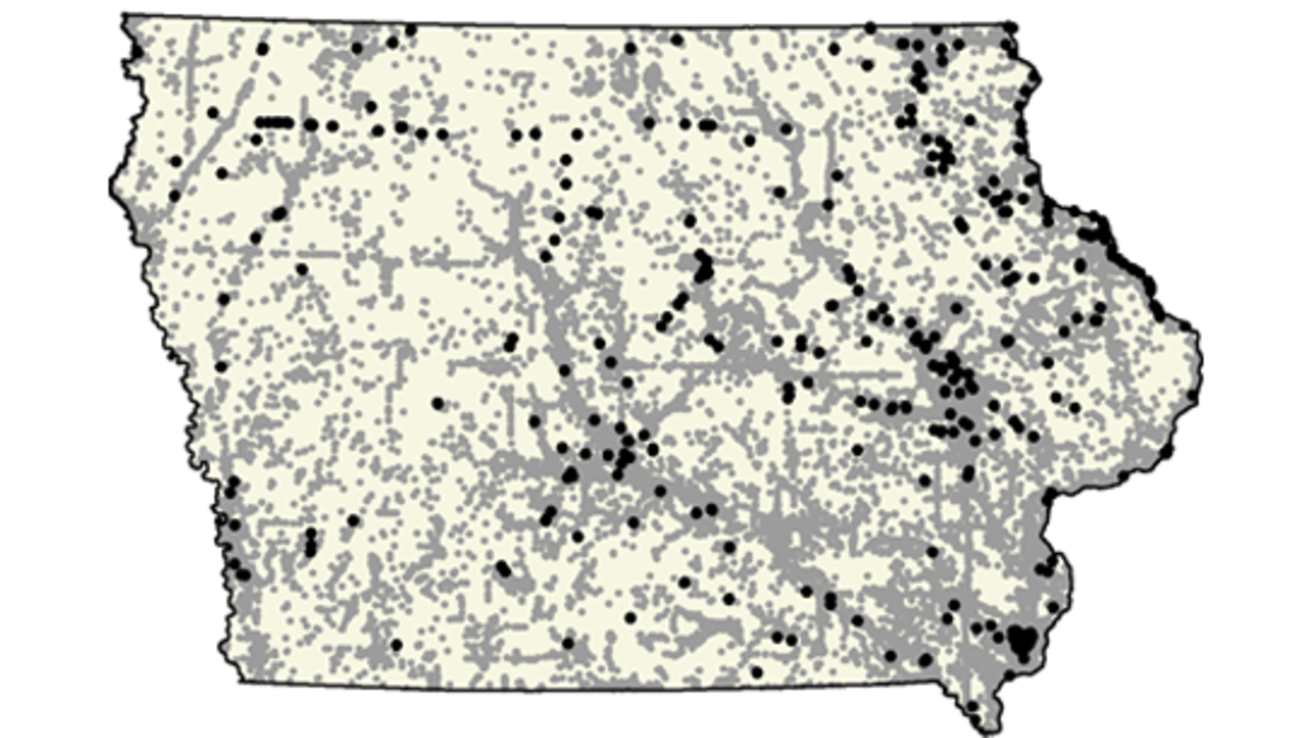
23
77
5,600 +
31
ACADEMIC ACTIVITIES
Collegiate Courses
John Doershuk | State Archaeologist | Instructor
Field Archaeology at Iowa Lakeside Laboratory
The 2026 Lakeside Laboratory archaeological field school included students from UI, UNI, and Iowa State University who conducted investigation of heretofore unexplored portions of 13DK143 at Mini-wakan State Park and continued investigation of a portion of 13DK9, the Abbie Gardner Sharp Cabin Historic Site located in Arnold’s Park on the shores of West Okoboji Lake. [Summer 2026, 10 students]
Anthropology 3243/Native American and Indigenous Studies 3243: Archaeology of the American Midcontinent
Students explored how archaeologists utilize regional archaeological data in addressing culture change issues to develop the essential grounding for understanding how people lived in different times and places in the past, and how precontact peoples relate to their modern descendants across the midcontinent. This course is especially useful for undergraduates and graduate students interested in the past beyond what historical documents reveal. Late Pleistocene and Archaic hunter-gatherer adaptations, Woodland and Late Prehistoric horticulturalists, Middle and Upper Mississippian emergent chiefdoms, and Historic period first contact, fur trade, and fort sites are explored. [Spring 2026, 20 students]

First-Year Seminar: The Skills That Time Forgot: An Introduction to Experimental Archaeology
First-Year Seminar: The Skills That Time Forgot: An Introduction to Experimental Archaeology
Students explore how people made arrowheads and early ceramics through a fun, engaging, hands on class. This course explores the process of combining the scientific method with archaeological artifacts and using the results from these experiments to learn about the people that created the artifacts recovered from archaeological sites. [Fall 2025, 11 students]
Lara Noldner | Bioarchaeology Director | Instructor
Anthropology 3305: Human Osteology
Students build knowledge of the human skeletal system that is foundational to a diversity of other fields in anthropology and medicine including: forensic anthropology, paleoanthropology, bioarchaeology, medical anatomy, physical therapy, human biomechanics, and biomechanical engineering. Topics include bone microstructure, growth, and remodeling; basic anatomy and nomenclature pertaining to the whole human skeletal system; methods for assessing age, sex, stature, ancestry, pathologies and cultural modification; applications of basic principles and data sources in anthropological research; and ethical considerations for human skeletal collections and pertinent federal and state statutes. [Fall 2025, 9 students]
First-Year Seminar: A Tour of Biological Anthropology (URES:1000)
Students explored the diverse field of biological anthropology and learned about many of the ways that knowledge of human biology can inform us about how people have evolved, migrated, and adapted to the many regions of the world we now inhabit. [Fall 2025, 15 students]
Student Exhibition
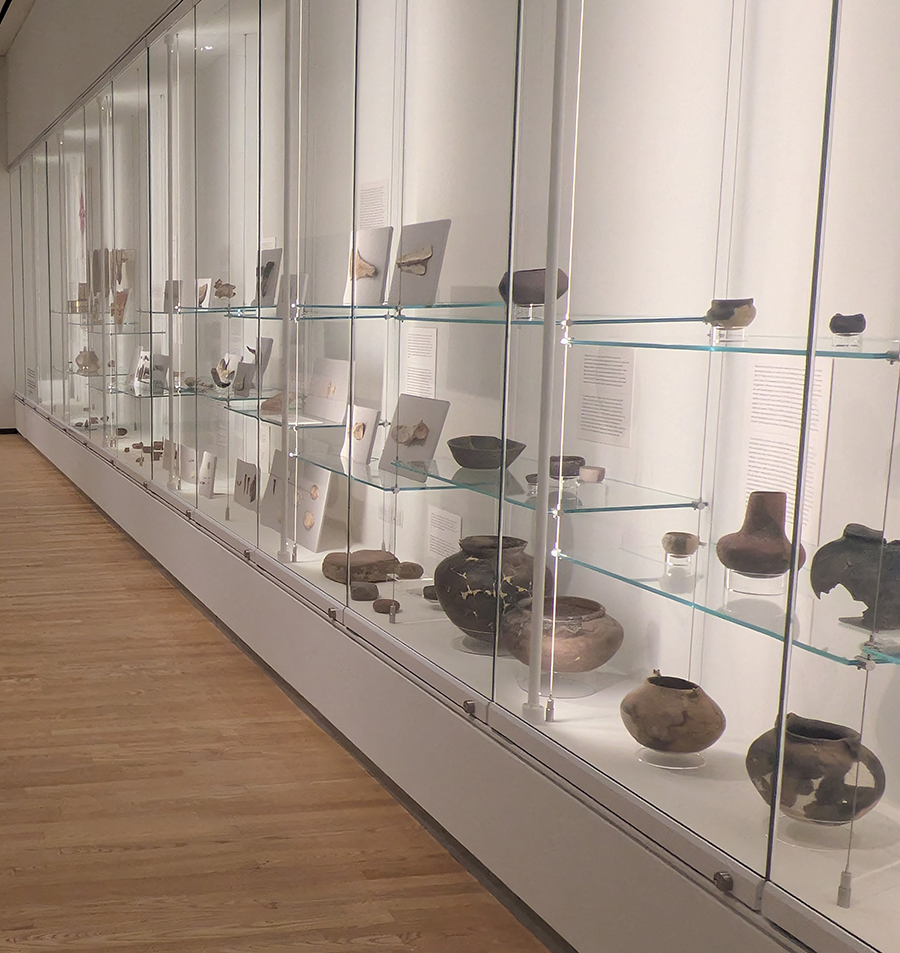
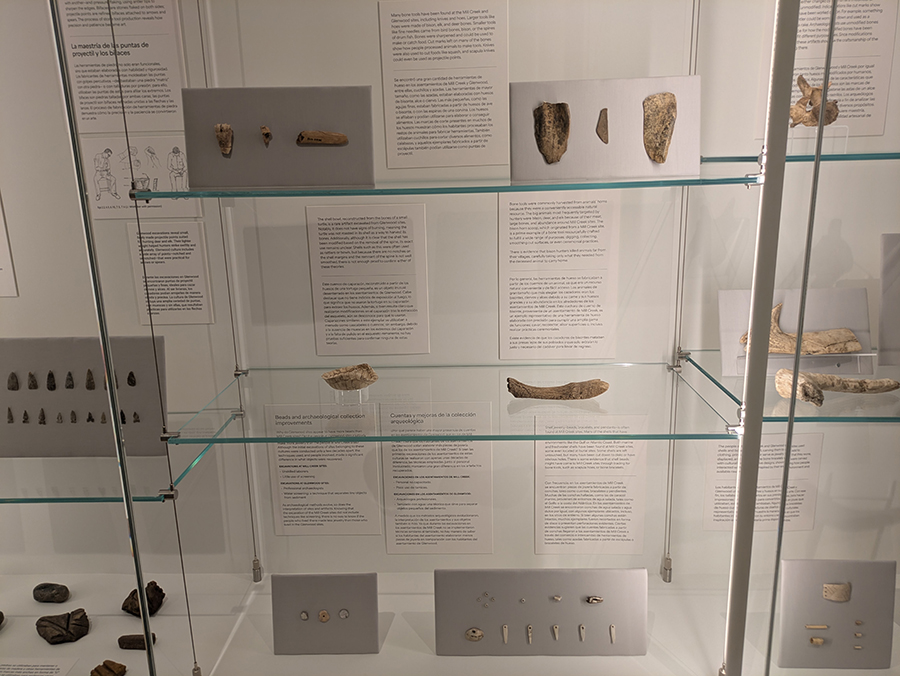
A collaborative, student-led exhibition, Ethics, Art, and Connections with Nature: Exploring the Archaeological Cultures of Mill Creek and Glenwood, was installed at the UI Stanley Museum of Art in July 2025. This exhibition was curated by students over the duration of the spring 2025 semester in the course, Anthropology 3145: Excavation to Exhibit: Making Artifacts Public, taught by OSA Collections Director Carrie Parris. In this course, 15 students worked collaboratively to develop interpretive themes and objectives and select artifacts for display. The exhibition is on display until January 2027.
Student and Volunteer Success
Many OSA staff members mentor students and train and supervise student workers, interns, and other volunteers. The OSA actively supports undergraduate and graduate student use of its archaeological, osteological, and comparative collections; scholarly documents; electronic databases; scientific instrumentation; and laboratory space for degree-related research.
These resources contribute to the educational experience of students in diverse UI departments including:
Anthropology
Biology
Classics and Religious Studies
English
Epidemiology
History
Mathematics
Museum Studies
School of Art, Art History, and Design
School of Earth, Environment, and Sustainability
School of Library and Information Science
Tippie College of Business
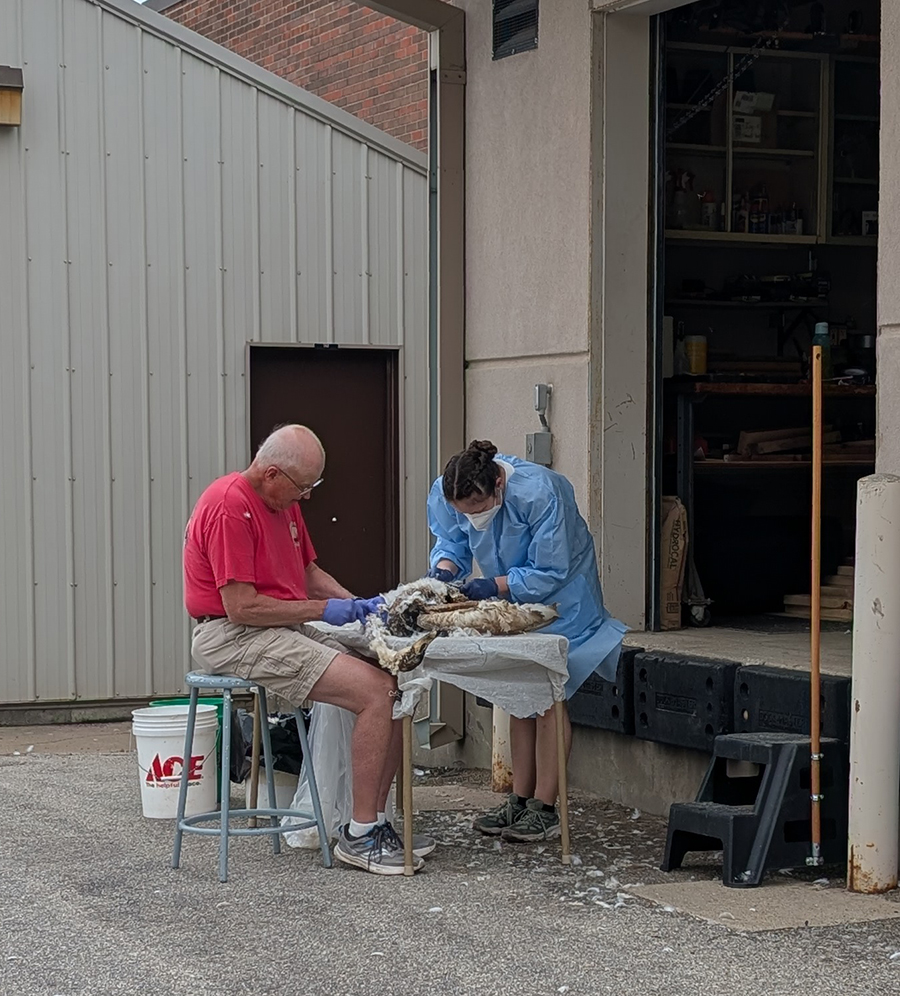
Volunteer Pat Collison works with collections assistant Seraphina Carey to de-flesh an ethically-sourced and permitted swan for bones to include in OSA's comparative collection.
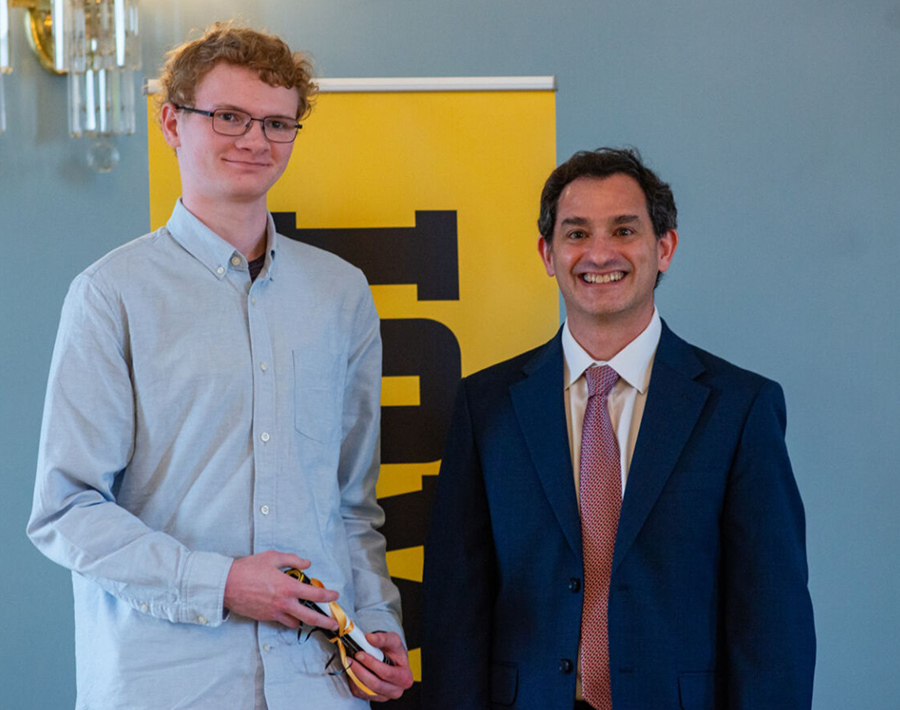
Will Sprengelmeyer is pictured with Vice President for Research, David Schwebel. Will received an Office of Undergraduate Research/Independent Creative Research by Undergraduates fellowship award to work on cleaning and researching the BLK Mastodon at OSA. He was also featured in the Office of the Vice President for Research 2026 Dare to Discover campaign that showcases student and postdoc researchers, scholars, and creators from across the University of Iowa on banners throughout downtown Iowa City.
In FY2026 the OSA facilities, collections, and staff provided classroom enrichment and workplace experience for a total of 30 students and 13 members of the public who worked to log 4,093 hours at the OSA contributing to project activities.
Participating Institutions:
- University of Iowa
- Cornell College
- Willamette University
- Kirkwood Community College
- Iowa Archeological Society
- Brooklyn Technical High School
- Iowa City School District
OFFICE & STAFF ACHIEVEMENTS
FY2026 Staff Transitions
As of January 2, 2026, long-time OSA Associate Director Stephen C. Lensink retired. In addition to Steve’s research contributions to Iowa archaeology, in his years of OSA service he has been responsible for many improvements to both the OSA facility and various aspects of its operation. Notable among these efforts are the implementation of a digital archival system and the financial model that has not only resulted in a nationally recognized high-quality repository but also created a sustainable income stream that directly supports the positions of OSA research collections director and senior collections assistant. Now as an OSA
Upon Steve’s retirement, Bill Whittaker was promoted from research director to associate director, and he embarked on an analysis of an extensive legacy collection from the Plum Grove historical site. Archaeologist Angela Collins was promoted to assistant research director and now serves as principal investigator for non-Iowa Department of Transportation (Iowa DOT) research projects, overseeing around 275 projects a year.
Blane Nansel retired after 29 years of service as the OSA’s cultural resource specialist. In that capacity he authored an astounding 1,579 Cultural Resource Evaluation reports for the Iowa DOT, reviewing transportation projects for potential cultural resource concerns. Upon Blane’s retirement, Archaeologist Alan Hawkins took over as cultural resources specialist.
Awards and Recognition
2026 Society for American Archaeology’s Outstanding Public Archaeology Initiative Award Recipient

In April, Strategic Initiatives Director Elizabeth Reetz traveled to the Society for American Archaeology (SAA) annual meeting in San Francisco to accept the SAA Outstanding Public Archaeology Initiative Award, which was awarded to the 38 authors of the book A Practitioner's Guide to Public Archaeology: Intentional Programming for Effective Outreach, edited by Reetz and Stephanie Sperling and published by Rowan & Littlefield in 2024. The award also recognized OSA Indian Advisory Council members Suzanne Buffalo and Julie Martineau, who contributed an essay on the importance of collaboration to protect cultural heritage.
This award recognizes exemplary, short-term public engagement projects. The 38 contributors worked together with editors Reetz and Sperling for a time span of 1-2 years and provided valuable time, expertise, and advice to address one of the biggest challenges in public archaeology: archaeologists interested in outreach receive little to no academic training or professional development to build needed skills. The project’s goal was to help archaeologists – at any career level – feel better-prepared to do public programming, make efficient use of scarce and underfunded time and resources, and eliminate some of the guesswork for many who, simply put, do not have the support needed to create intentional and effective programming. It aims to help archaeologists move beyond the check box to do more ethical, collaborative, effective, and impactful public outreach that can inspire public interest in archaeology, historic preservation, and stewardship.
Notable Publications

This Is the Route of My Forefathers:
This volume was published in February 2026 by the University of Iowa Press, OSA adjunct research associate Bill Green, along with contributors Lance Foster and Saul Schwartz. Green embarked on an extensive book launch tour in the spring that reached over 250 people. The University of Iowa Press provides this book description: The state of Iowa is named for the Ioways, but most Iowans—and most Americans—know little about them. In This Is the Route of My Forefathers, William Green elevates an understudied history by synthesizing oral traditions, written records, and archaeological data to decode the 1837 map drafted by Ioway leaders. Spanning Indigenous settlements from Missouri to Wisconsin, this map was created to depict tribal history and defend tribal land claims at the height of the Indian removal era. Illustrating nearly 200 years of Ioway history, the 1837 Ioway map provides insights into the tribe’s political and diplomatic strategies, their relationships with neighboring nations, and how they resisted and negotiated in the face of dispossession. This Is the Route of My Forefathers uses an interdisciplinary approach to reveal how group accounts may fade over time, while accounts of origin—legendary histories—remain rich and vibrant.

Human Identities in the Archaeological Record:
Elizabeth Reetz and John Doershuk contributed a chapter to this international volume, released in June 2026 by Bloomsbury Academic. The book explores how individual and collective identities were formed and negotiated, combining archaeology, bioarchaeology, and archaeosciences to unearth the stories of marginalized groups, migrants, and communities typically absent from written history. The chapter by Reetz and Doershuk, “After the Storm: Counteracting the Impact of Catastrophic Weather Events on the Indigenous Archaeological Record with Creative Mitigating Solutions in the Midwestern United States,” is described by the editors in the introduction with, “Chapter 15 presents a powerful example of collaborative heritage management in the Midwestern United States for the preservation of Indigenous sites. Faced with the dual threat of environmental disaster and the ongoing marginalization of Native American Nation histories, Reetz and Doershuk's trailblazing project is a model of ethical archaeology, actively involved in redressing historical injustice and of good practice in context, attesting how collaborative efforts - rooted in dialogue, respect, and shared authority - can support the protection of ancestral sites and foster the revitalization of cultural traditions."
Special Projects
82nd Plains Anthropological Conference-68th Annual Midwest Archaeological Conference Joint Meeting
OSA teamed up with Professor Matt Hill of the University of Iowa Department of Anthropology to organize and host in autumn 2025 in Iowa City the first joint meeting of the Plains Anthropological Conference and Midwest Archaeological Conference (PAC-MAC) in 25 years. The planning process was complex but successful largely thanks to OSA’s Angela Collins and Teresa Rucker (among many others) and Plains Treasurer Chris Johnston. The meeting primarily occurred in downtown Iowa City. With over 400 participants, the three-day meeting included 14 vendors, 25 individual or organizational donors, 21 paper and poster symposia, two hosted receptions, a banquet attended by more than 130 that included an excellent presentation by UI history professor Stephen Warren, and organized off-site tours to the Meskwaki Cultural Center, the African American Museum in Cedar Rapids, and Effigy Mounds National Monument.
More than a dozen OSA staff gave presentations and participated in 12 different sessions. John Doershuk helped to coordinate an Iowa Archeological Society collaborative symposium, in which he, Bill Whittaker, Pat Collison, Samantha Murphy, and Elizabeth Reetz presented. Lara Noldner chaired and presented at a session in honor of Lance Foster. Mary De La Garza, Angela Collins, and Riley Pacer participated as panelists in the student workshop focused on drones in archaeology. Elizabeth Reetz held a two-hour practicum/workshop on planning and implementing public archaeology programming. Carrie Parris and Seraphina Carey hosted an open house of the OSA repository.
FIRST® Robotics Archaeology-themed Challenge
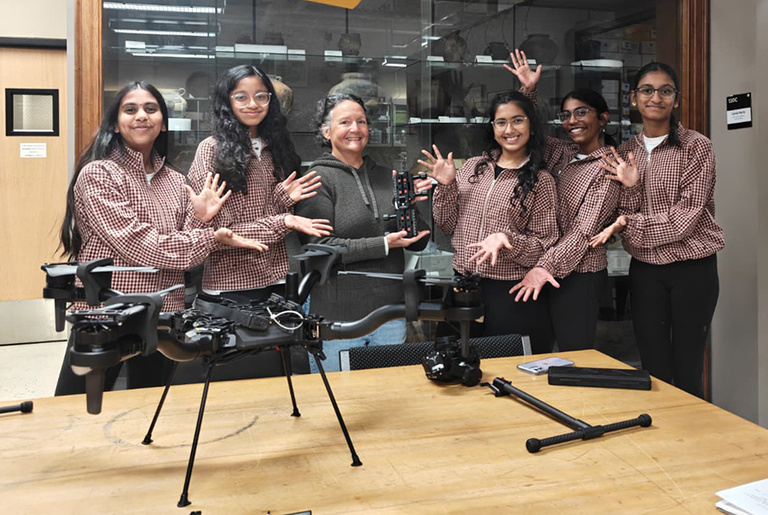
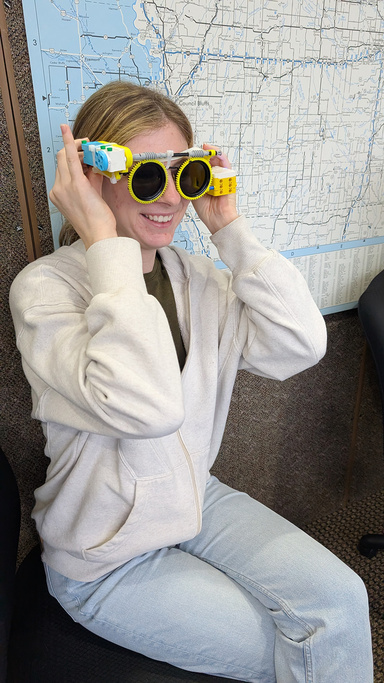
The international FIRST (For Inspiration and Recognition of Science and Technology) organization hosted three different archaeology-themed robotics competitions for their 2025-2026 season, and OSA responded to not only statewide, but international inquiries from K-12 teams for guidance and mentorship. Three different competitions occurred in Iowa, involving over 500 teams and at least 30,000 kids across the state: FIRST® LEGO® League: Unearthed, FIRST® Tech Challenge: Decode, and FIRST® Robotics Competition: Rebuilt. Part of their mission was to plan and implement an “innovation project” that involved learning and about researching a challenge or problem in archaeology and working with professional archaeologists to devise and refine a solution to their chose problem. About 15 OSA staff members assisted with email inquiries, innovation project feedback, team mentorship, in-person and tele-conference interviews, webinars, and an open house to accommodate hundreds of inquiries from youth wanting to learn about challenges in archaeology. In total, OSA completed 30 face-to-face interviews or events with about 1400 K-12 participants, and OSA’s web resource had over 5,200 views from more than 3,400 active users. Many teams created prototypes for their innovation projects, including a bespoke drone attachment that can hold two cameras and specialized glasses to help drone pilots transition their eyesight from a bright sky to a darker remote control screen. Several teams that OSA interacted with advanced to state and regional competitions.
BLK Mastodon, Wayne County, Iowa
Work continued in-house at OSA on the cleaning and restoration of mastodon bones recovered during a community-driven excavation in rural Wayne County in 2024. The BLK Mastodon is Iowa’s most complete mastodon skeleton recovered to date with 20 different elements represented, including the almost complete cranium and a portion of one tusk. An important milestone was successful engineering to disconnect the preserved portion of the tusk from the cranium and flip the latter so conservation work could continue to expose and stabilize the underneath portion. This work fully exposed the intact upper tooth rows, which confirm based on the extensive wear that this was an elderly individual. The remains date to between 13,600 and 13,900 years ago and therefore potentially overlap with when the earliest known Native American ancestors first began utilizing what is now known as southern Iowa. Student volunteers contributed an additional 448 hours during FY26 cleaning skeletal elements and the skull. This increases the total student volunteer hours on the project to 1,486 hours. This fall, OSA transported the mastodon remains to the Prairie Trails Museum in Wayne County for their new exhibit.

Professional Development and Service
OSA staff continually strive to learn new skills, participate in regional and national conferences, and contribute to the profession through service. The majority of staff completed CPR and First Aid training in January.
A number of staff members participated in Society for American Archaeology and American Cultural Resources Association webinars, including:
- ACRA Webinar: The 2026 Outlook for CRM
- SAA Webinar: Introduction to Historical Plastics
Several staff also participated in the Indigenous Collections Care Speaker Series presented by the Indian Arts Research Center (IARC) at the School for Advanced Research and Gilcrease Museum. Topics covered in these webinars included:
- Intellectual Care of Collections
- Physical Care of Collections
- Relationship Building & Consultation
- Use & Access of Collections
Bill Whittaker, Colleen Randolph, and Elizabeth Reetz each presented at the Preserve Iowa Summit in Ankeny in June 2026.
Lara Noldner presented on the OSA’s documentation of a post-contact family cemetery disturbed by quarrying at Cherokee History Week in Cherokee, IA, in late September 2025. She was also an invited panelist at the 2nd annual Summit of Maryland Indigenous People and Archaeologists in Millersville, Maryland, in early September.
OSA continued its involvement with the Alexandria Archive Institute’s FAIR+CARE Network grant, with Research Collections Director Carrie Parris participating in late October 2025 in a three-day workshop culminating Year 2 of the three-year grant. The workshop, hosted by the primary grant recipients, was held at the at the Lodge at Marconi in Marshall, CA (in the San Francisco Bay Area).
Carrie Parris earned a SQL Certificate through Kirkwood Community College. SQL, or Structured Query Language, forms the basis of many database programs. Knowledge gained through this course will help Carrie better manage the OSA’s collections database. Nationally, Carrie is part of the Nationwide Collections Locator Project, an initiative to create a national database of archaeological collections. She is also active in the Association for Archaeological Collections and Repositories (AACR) and the Archaeological Collections and Repositories Community of Practice (ACR CoP), two related organizations dedicated to the curation of archaeological collections. Locally, Carrie participated in one-day Museum Studies Curriculum Retreat and judged posters at the Office of Undergraduate Research (OUR) fall and spring research festivals. Carrie also attended a 4-day workshop on Mount Making for Exhibits hosted by the Center for Collections Care at Beloit College.
Elizabeth Reetz attended the 2025 Conference on Public Archaeology in August in Washington, D.C. The conference included a series of short, hands-on workshops focused on public archaeology building skills and several panel sessions where participants could engage with each other. Elizabeth led a panel on integrating archaeology and K-12 teacher needs and participated in a panel on archaeology month successes and challenges. Elizabeth also attended the Society for American Archaeology annual meeting in San Francisco in April to co-lead an archaeology and history walking tour of Chinatown, assist with staffing of the Project Archaeology exhibit booth, and attend the awards ceremony and business meeting.
In the Media
Several media outlets and other organizations featured OSA staff and projects via more than 30 radio interviews and podcasts, newspaper and web articles, television and web news clips, social media shorts, and YouTube videos.
Expand to see media titles and links
| Date | Title | Outlet and Link |
|---|---|---|
| July 23, 2025 | Historic rock dig yields small artifacts | The Hawk Eye |
| August 15, 2025 | Excavation to exhibit: Student-curated exhibition | Stanley Museum of Art |
| September 25, 2025 | Iowa History 101: Adolescent Health, Mortality and Mortuary Treatment at Dubuque’s Cemetery | Iowa History YouTube |
| October 12, 2025 | Our favorite photos from Iowa City's Indigenous Peoples' Day Celebration | Iowa City Press-Citizen |
| October 17, 2025 | Iowa Lakeside Laboratories history & modern day research on blanding turtles In Okoboji | Iowa Life | Iowa PBS YouTube |
| January 23, 2026 | The astounding life and times of Lee Swearengin, Iowa archaeologist | Iowa Public Radio |
| January 26, 2026 | Sioux Honey Association expansion brings jobs; historic district moves forward | KTIV |
| January 29, 2026 | Historic poor farm blends the old and new | Iowa Farmer Today |
| February 23, 2026 | Office of the State Archaeologist built students’ understanding of archeology through global competition | Office of the Vice President for Research |
| March 2, 2026 | Palace Site: The Des Moines spot where humans have lived for 7,000+ years | IowaStartingLine |
| March 23, 2026 | State archaeologist gives talk on the original fort | Fort Madison Daily Democrat |
| March 24, 2026 | This Is the Route of My Forefathers with Bill Green | SAR School for Advanced Research YouTube |
| April 6, 2026 | What we can learn from the Ioway tribe's 1837 map | Iowa Public Radio |
| May 14, 2026 | Blood Run forum highlights preservation efforts, future vision for National Historic Landmark | Sioux County Radio |
| May 20, 2026 | Historical documents showcased in new book unlock history of Iowa Tribe in Oklahoma | KOSU Radio |
| June 22, 2026 | An Ioway map drawn in 1837 offers a treasure trove of historical insight | Little Village |
RESEARCH
ARCHAEOLOGICAL & ARCHITECTURAL INVESTIGATIONS
The OSA conducts both contract and grant-funded research involving archaeological and architectural history studies statewide. These projects, regardless of funding source or sponsor, generate important new knowledge about precontact and historic era Midwestern adaptations, and they form the basis for many staff publications, professional and public presentations, and student and faculty research projects.
Infrastructure Surveys
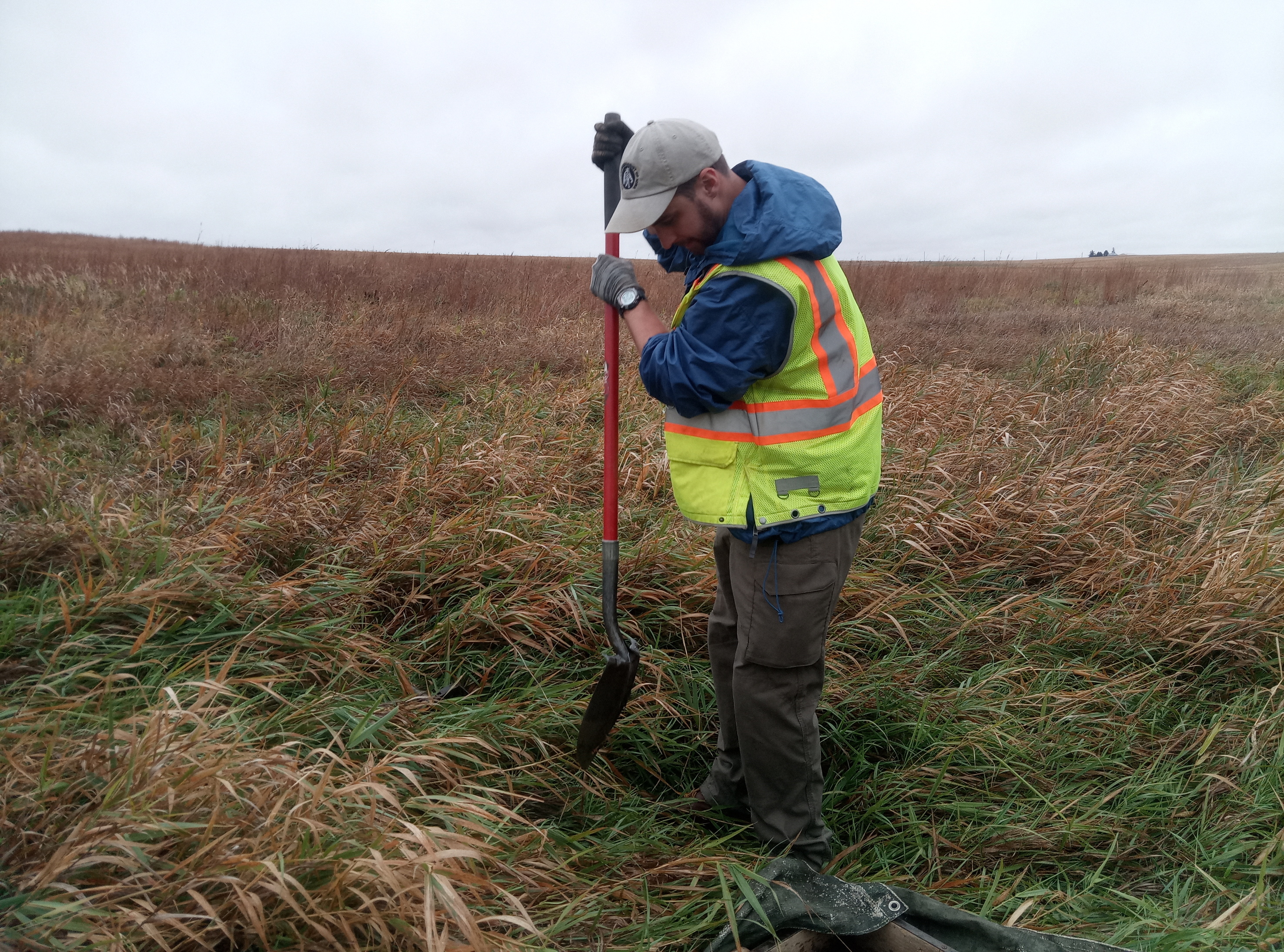
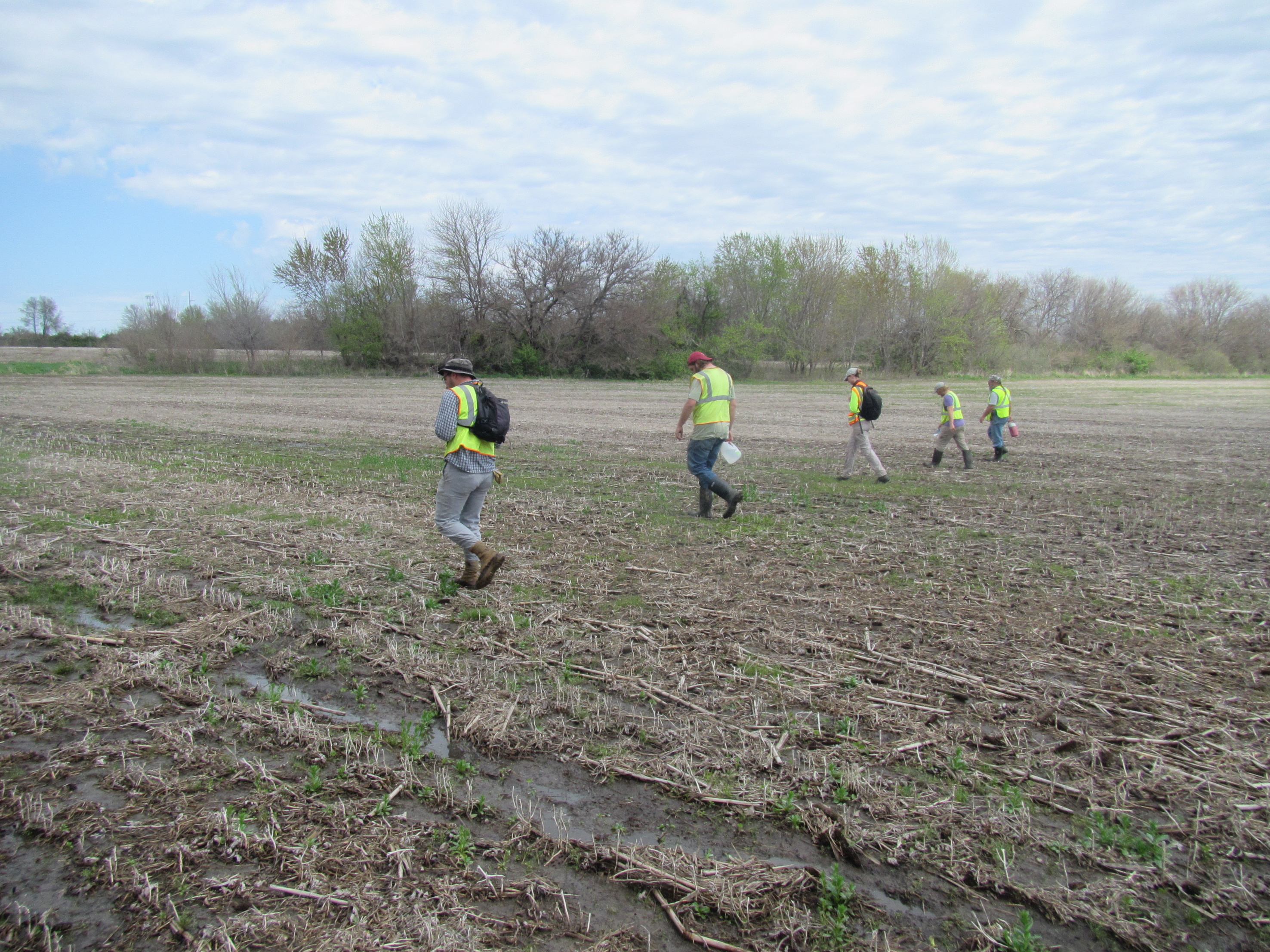
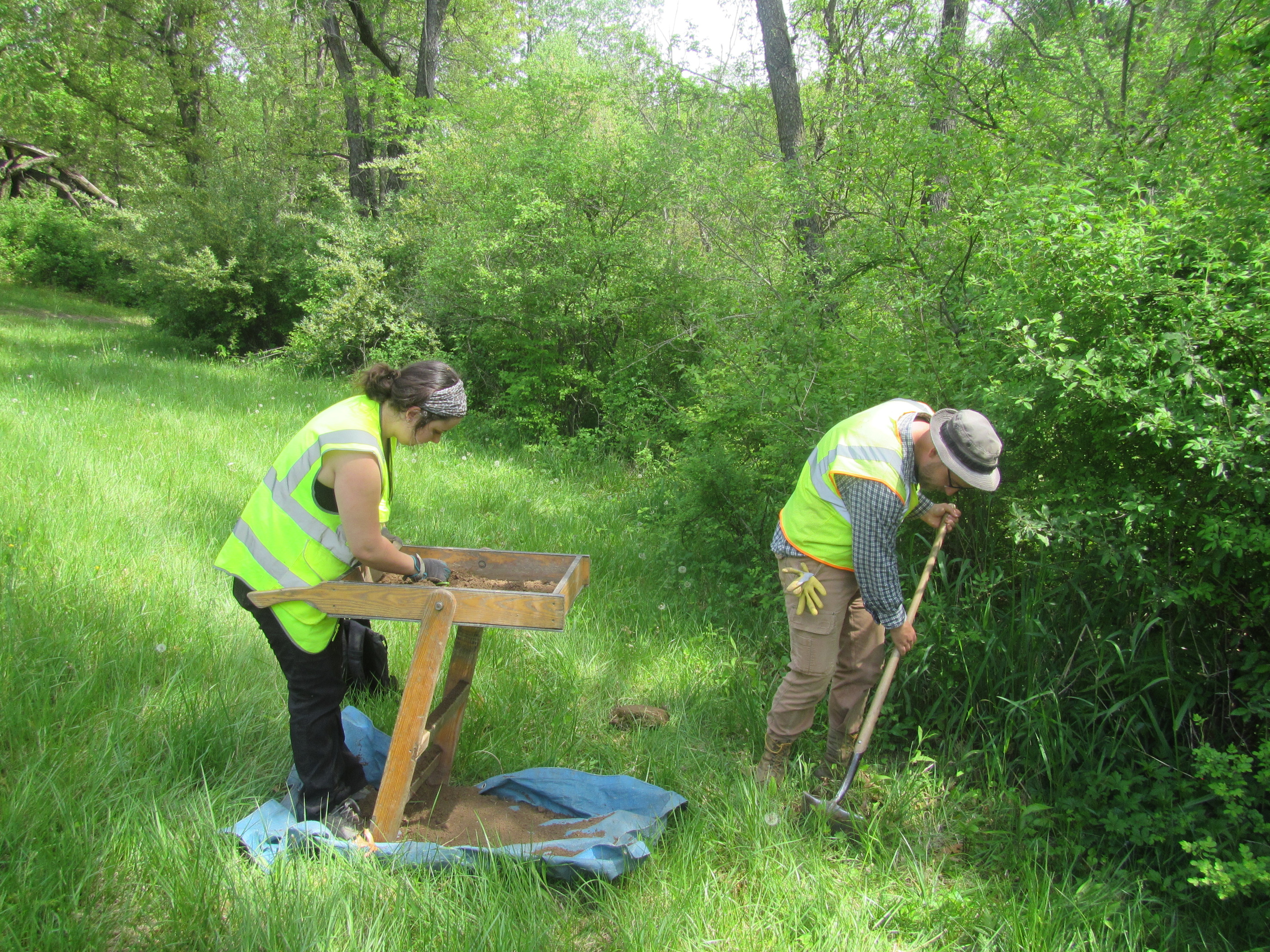
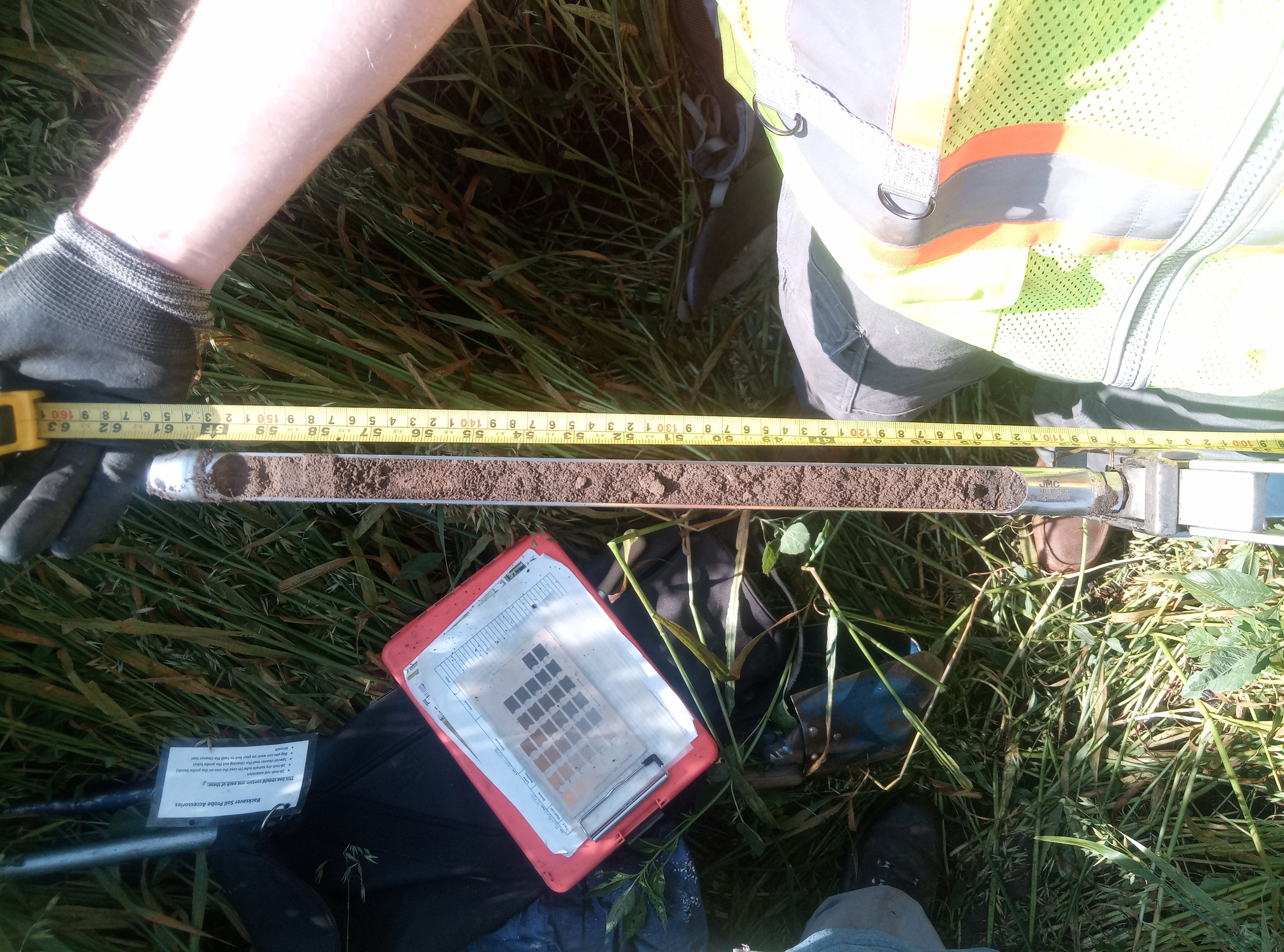
Excluding Iowa Department of Transportation (Iowa DOT) projects discussed below, the OSA completed 105 archaeological and architectural projects in FY2026, making a significant contribution to statewide economic development. These efforts included 21 archaeological or architectural history Phase IA and desktop evaluations, 73 Phase I archaeological surveys, and one Phase II archaeological testing project, recording or supplementing information on 31 archaeological sites. OSA staff also completed six Phase I architectural history surveys. Additional work included a field condition assessment, bridge assessment, drone Lidar survey, and a Phase III architectural history mitigation.
OSA’s FY2026 infrastructure projects spanned 78 Iowa counties, serving 24 sponsors. Local government clients included the counties of Butler, Cass, Polk, and Scott, and the cities of Ames, Holy Cross, and Oelwein. State agency clients included the Iowa Army National Guard, Iowa Department of Agriculture and Land Stewardship (IDALS), Iowa Department of Natural Resources, and the Iowa Natural Resources Conservation Service (NRCS). For the NRCS, the OSA team completed over 600 cultural resource evaluations for a wide range of projects, including tile installations, wetland creations, prescribed burns, erosion control measures, and other agriculture-related initiatives. Work also was conducted for the Meskwaki Nation, the Northwest Bolsena (Italy) Archaeological Project, and several private individuals and engineering companies. OSA provided CRM compliance support to one nonprofit affordable housing client, Cedar Valley Habitat for Humanity.
Iowa Department of Transportation
FY2026 marked 56 years of contracted archaeological services and 37 years of historic architectural services provided to the Iowa Department of Transportation (Iowa DOT). Staff submitted 176 Cultural Resource Evaluations, two Phase I intensive archaeological survey reports, and one historic architectural reconnaissance report.
Project Highlights
Archaeology supports future improvements along Interstate 380 between Cedar Rapids and Iowa City
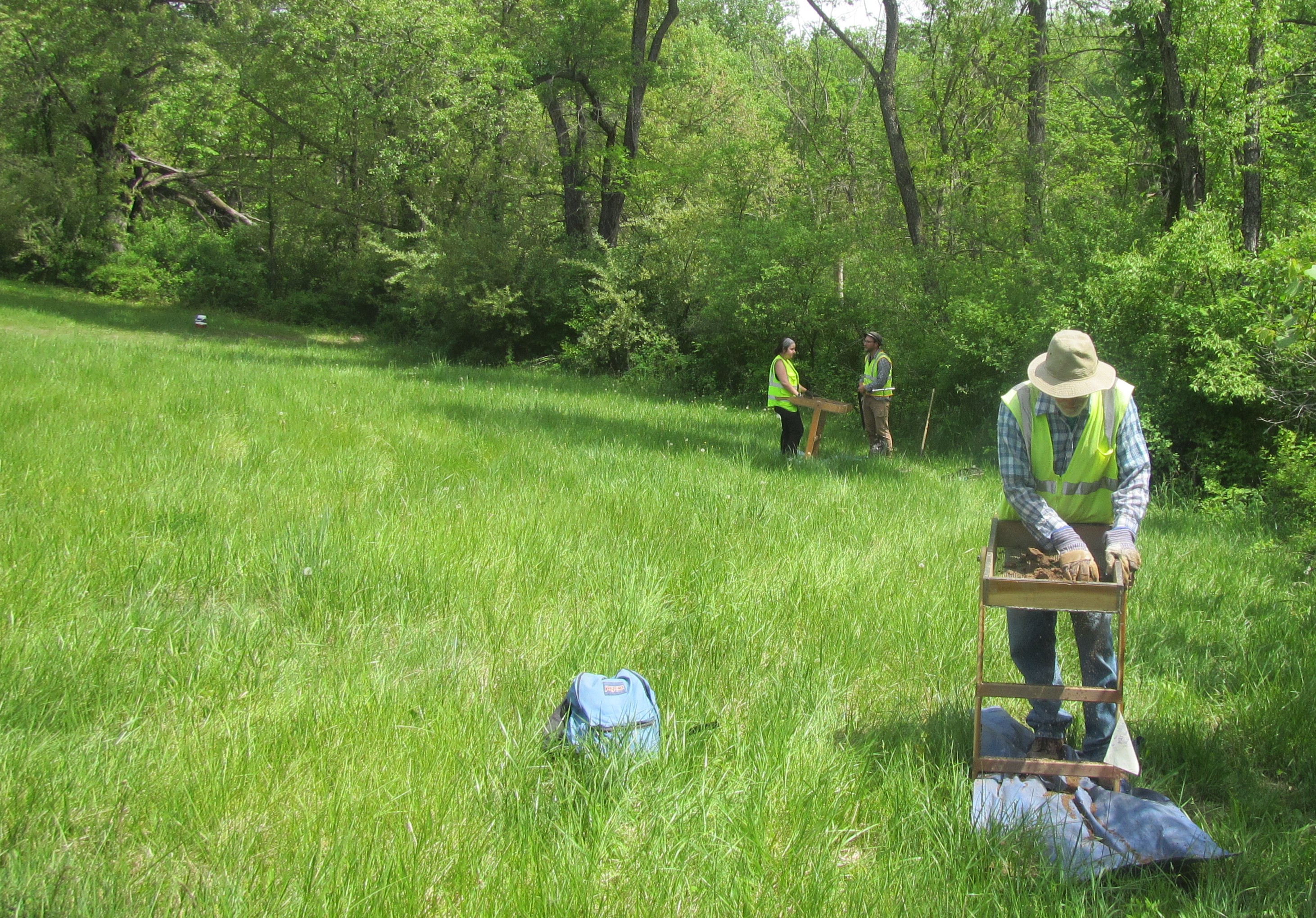
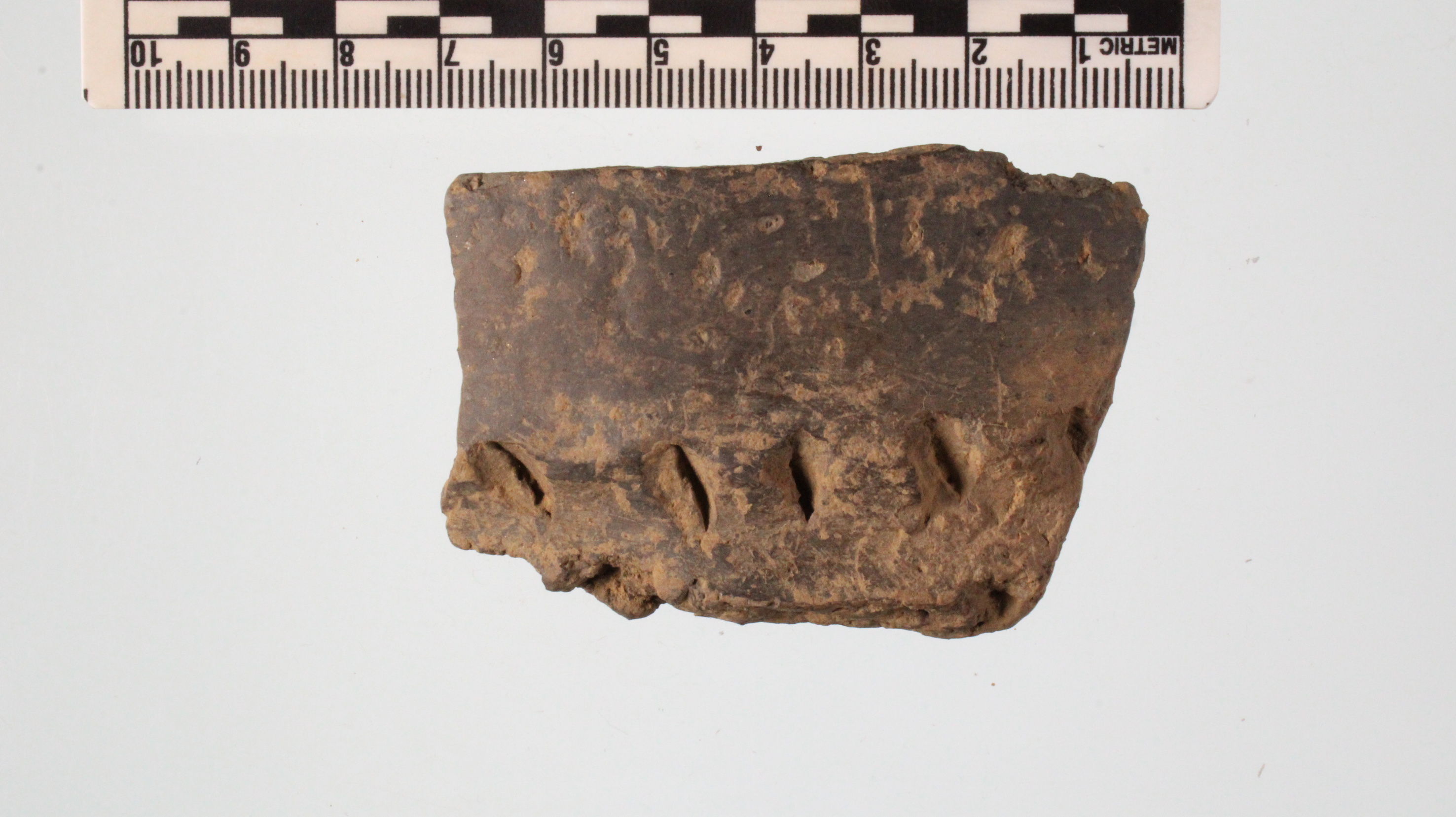
In preparation for planned improvements along the busy I-380 corridor, OSA surveyed 360 acres within a four-mile long study area in Johnson County (OSA TR 2934). Archaeologists investigated 14 sites, most of which lacked integrity or significance. However, several resources were recommended for construction avoidance: a mound site (13JH1595) and the historic village of Curtis (13JH1685). In addition, another mound was identified just outside the project corridor (13JH1691). The information gathered through this survey will help guide project design and planning as transportation improvements move forward.
Documenting Springbrook State Park's CCC legacy
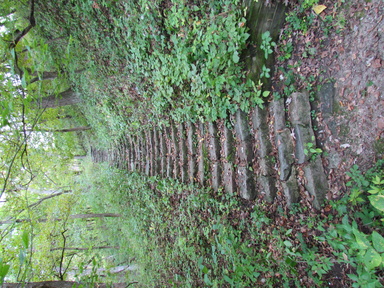
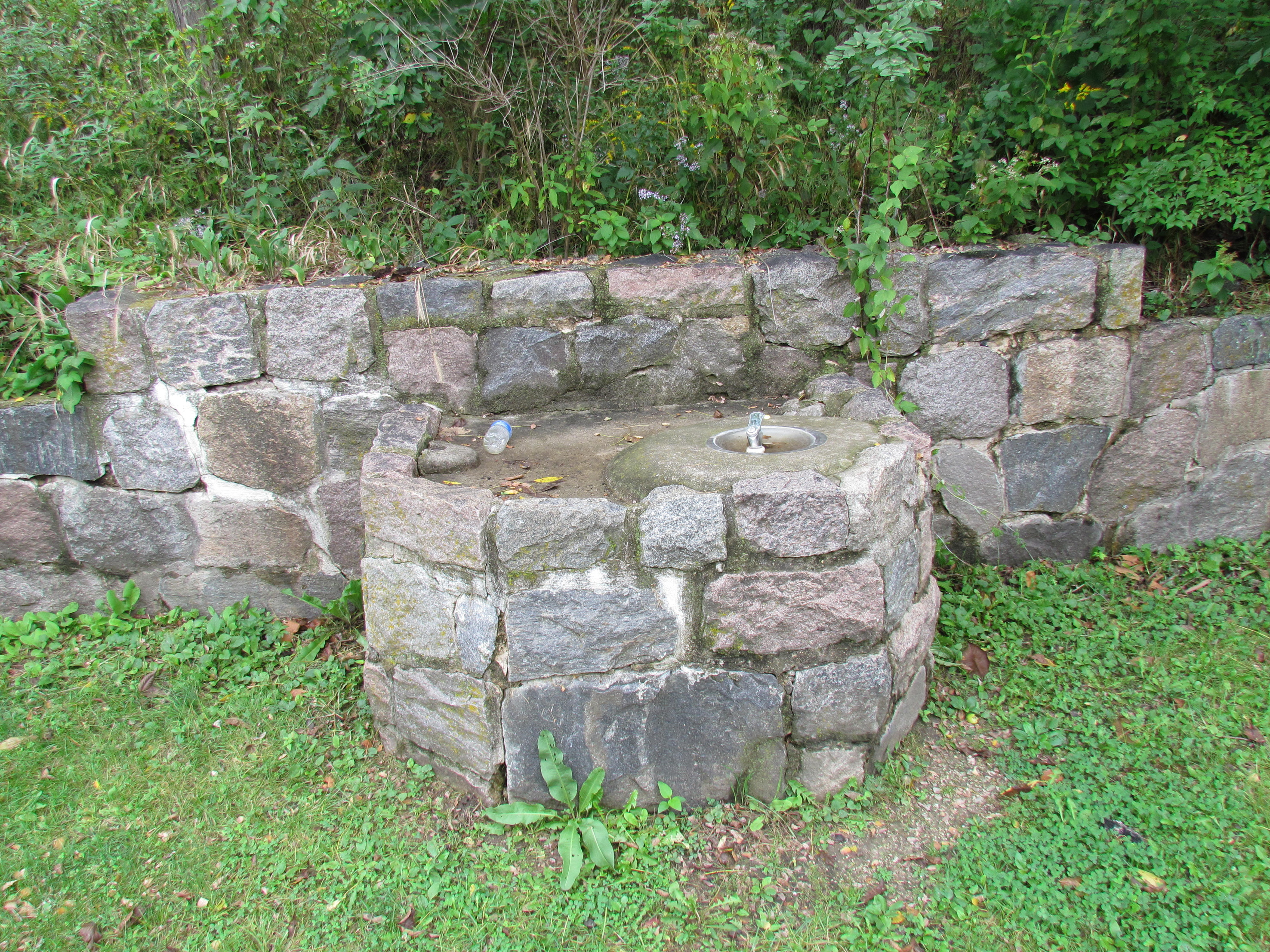
The OSA conducted a historic architectural mitigation for the Iowa DNR related to the planned demolition of two latrines built in 1935 by the Civilian Conservation Corps (CCC) at Springbrook State Park, Guthrie County (OSA TR 3124). The project documented the condition of each of the park’s 37 known CCC resources, finding that 10 of these had been removed or replaced since 1989. Of the 27 remaining resources, all retain enough integrity to still contribute to the significance of the National Register district here. Some of these remaining resources include the park custodian’s residence; a picnic shelter; a bath house; restrooms and latrines; stone steps and drinking fountains; and the dam, spillway, and lake. The updated documentation and recommendations will assist the Iowa DNR in managing its CCC-related state park assets.
Pipeline survey revisits a precontact mound and possible Glenwood culture lodge
Survey work associated with proposed pipeline upgrades included investigations at two previously recorded archaeological sites: a precontact mound (13ML193) and a possible Glenwood culture lodge (13ML255). The Glenwood culture people, who occupied southwestern Iowa between approximately AD 1200 and 1350, are known for their distinctive domed lodges and use of diverse local plant and animal resources. Although both sites have been somewhat disturbed, OSA identified evidence that intact archaeological deposits may remain. By documenting these resources, OSA provided information that will help protect an important part of Iowa's archaeological heritage while allowing infrastructure improvements to move forward responsibly.
Historic cemetery and early farmstead identified ahead of reclamation project
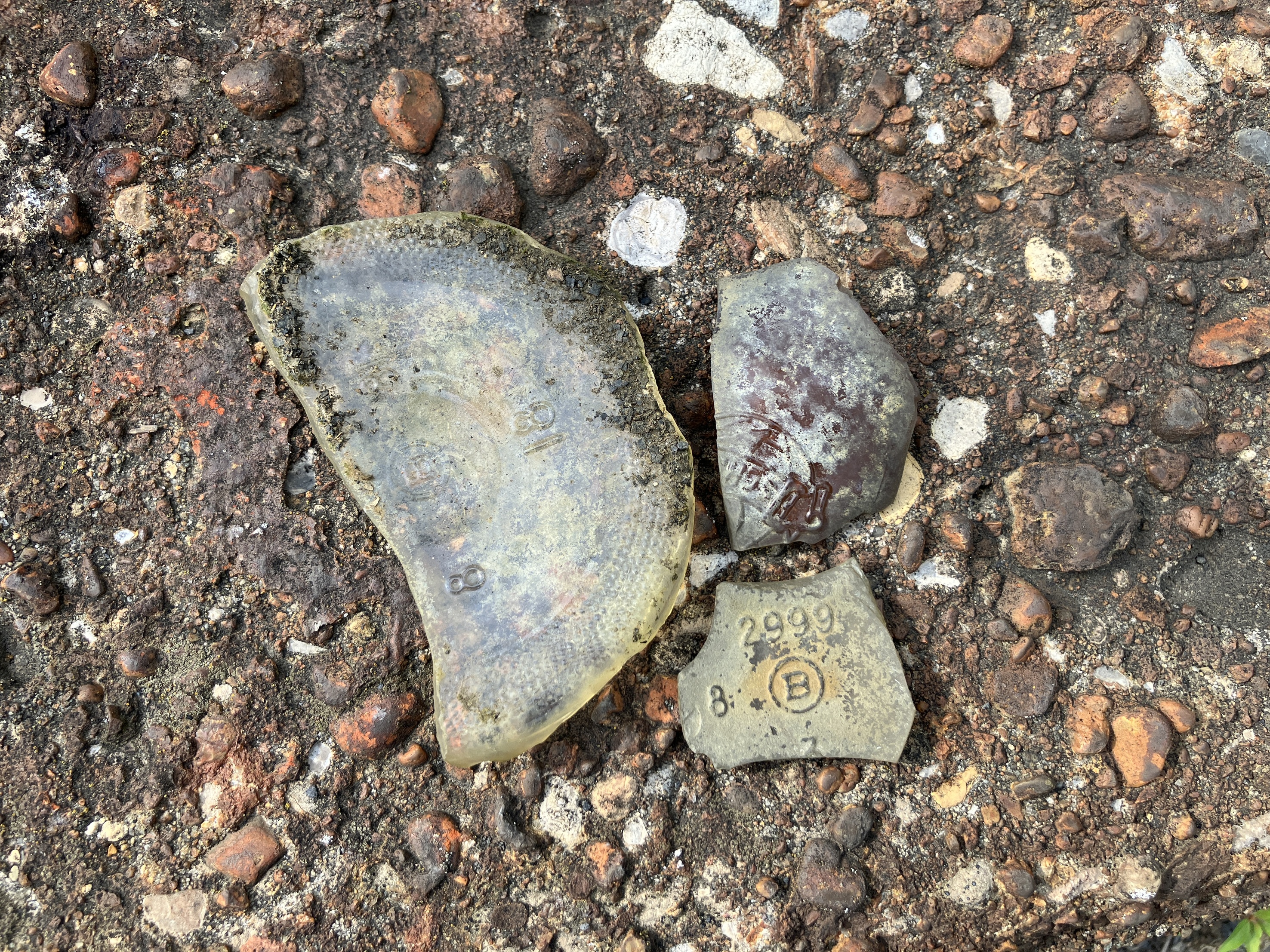
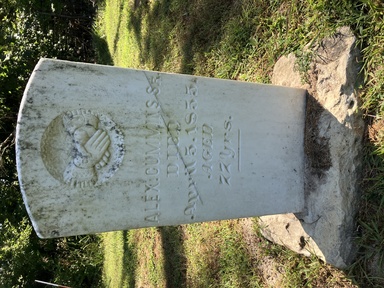
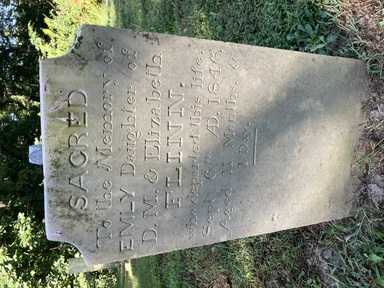
In preparation for a coal mining reclamation project in Van Buren County, a historic cemetery (13VB889) and a farmstead (13VB890) were newly recorded as archaeological sites (OSA TR 3096). James Rhoades established the farmstead around 1839. The oldest grave marker in the adjacent Rhoades Cemetery is that of Charles C. Myers, who was born in 1837 and died in 1839. The identification of these sites enables the reclamation project to move forward while protecting important pieces of the county’s heritage.
Documenting a former Episcopal camp
Phase I historic architectural survey at Barkley State Forest documented Camp Morrison, a former Episcopal camp and conference center that operated in Boone County from 1961 to 1997 (OSA TR 3202). Researchers identified eight remaining camp resources, including a chapel, administrator’s home, dormitory, office, and swimming pool. While many buildings have been long-ago removed and others substantially altered over time, the project documented the camp's history and remaining features before their removal. This data supports informed planning and helps the Iowa DNR manage state forest infrastructure while maintaining a record of an important chapter in the property's past.
RESEARCH TECHNOLOGY
32,694
224
153
770
OSA’s commitment to conducting and disseminating modern high-quality archaeological research requires a significant investment in research technology. From maintaining complex databases, to deploying a suite of scientific instruments and equipment, to supporting an array of Internet and other social media, the OSA’s involvement in research technology covers the gamut of twenty-first century breakthroughs in archaeology.
Iowa Site File
Most archaeological sites are recorded in the Iowa Site File as a result of cultural resource surveys conducted by professional archaeologists. Some, however, are reported by landowners, avocational archaeologists, and other non-professionals.
Field and Laboratory Technology
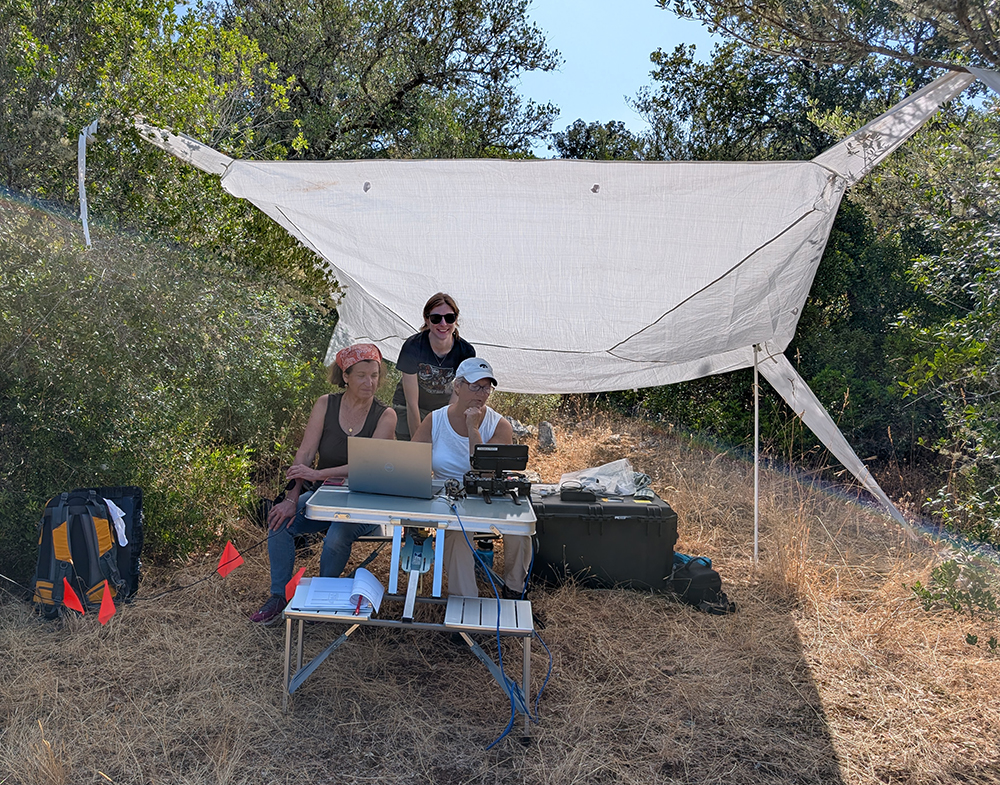
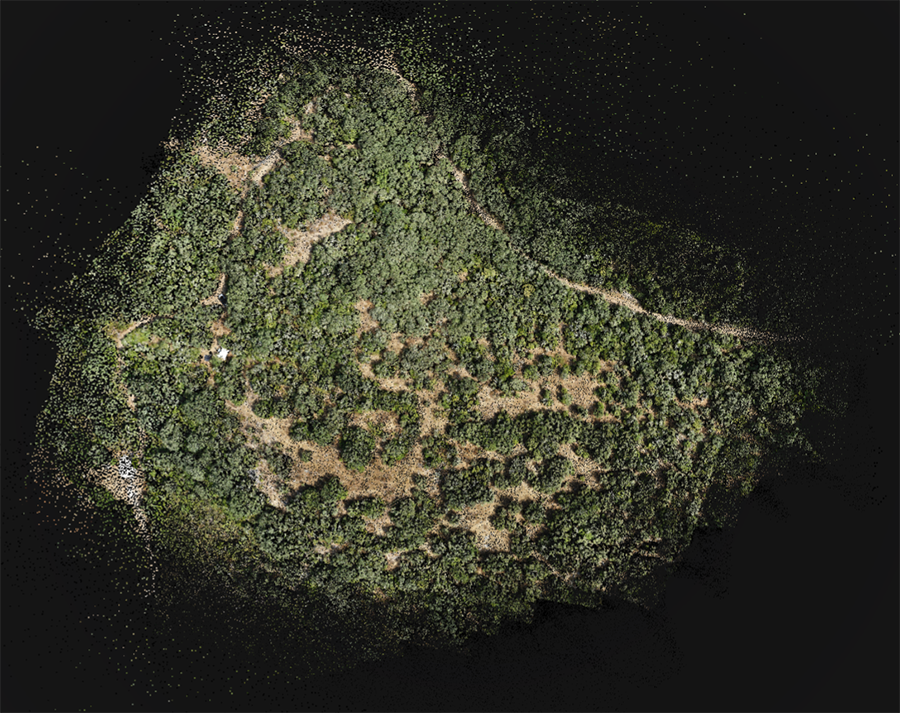
Many of OSA’s research endeavors require the use of highly specialized scientific technology in both the field and laboratory setting, including robotic laser transit with data recorder, high resolution GPS units, tablets for mobile data collection, and small drones (UAS) to fly over archaeological sites to create surface models and for infrared thermographic analysis. In FY2026, OSA Research Technology Director Mary De La Garza and Professor Susan Meerdink (UI Department of Geographical and Sustainability Sciences) continued their partnership that includes both technology sharing and student instruction by De La Garza.
In addition to projects in Iowa and Wisconsin, De La Garza continued analysis of lidar and thermal survey data gathered from the hilltop settlement site of Agroal in Portugal during her collaboration with Katina Lillios in summer 2025. The data yielded evidence of previous surveys and helped to document new areas of interest from the early Bronze Age and Medieval periods.
Website and App Development
During FY2026, the OSA maintained and supported portals for the Iowa Archeological Society, Association of Iowa Archaeologists, Iowa Archaeology (publications), and Ancient Trails in Iowa, as well as support for I-SitesPro, I-SitesPro GIS, I-Sites Public, I-SitesGov, and iArc.
COLLECTIONS
The OSA continually adds archaeological materials and related documents to the State Archaeological Repository and provides materials for local, regional, and national exhibition and research purposes.
114

8
38
3,700 +
308,283
94 %
Loans
Eight new loans of archaeological material were made during FY2026. A total of 236 specimens were loaned. Individuals borrowing OSA materials represent the Office of the State Archaeologist, the University of Iowa Museum of Natural History, Jones County Conservation, and the University of Iowa Paleontology Repository. Artifacts from 49 accessioned collections and two unaccessioned collections representing material from 49 sites and one notable location were loaned during FY2026. Artifacts were loaned for informal displays accompanying presentations or formal museum exhibits.
Collections
The archaeological collections at the OSA are used for many different purposes including outreach and educational, loans, and research. In FY2026 114 individual accessions, representing 101 unique sites, were accessed. The majority of these collections were accessed for research purposes, as examples for classes or groups visiting the OSA, or for exhibit.
Users of collections during FY2026 included 24 individuals with affiliations such as University of Iowa and Iowa State University and one independent researcher. Among those from the University of Iowa, the following units and departments were represented: the Office of the State Archaeologist, the Department of Anthropology, the Department of History, the Department of Art, the University of Iowa Museum Studies Certificate Program, and the University of Iowa Museum of Natural History.
Rehousing Project
Many intern and volunteer hours during FY2026 were dedicated to the Rehousing Project. This project focuses on updating the storage materials used in the repository. Interns and volunteers systematically replace old, non-archival bags, boxes, tags and labels with new archival quality bags, boxes, and printed paper tags. During FY2026, 385 accessions were rehoused.
Archives
Many intern and volunteer hours during FY2026 were dedicated to the Rehousing Project. This project focuses on updating the storage materials used in the repository. Interns and volunteers systematically replace old, non-archival bags, boxes, tags and labels with new archival quality bags, boxes, and printed paper tags. During FY2026, 385 accessions were rehoused.
iArc Stats for FY2026:
308,283 total records, 94% available digitally on iArc
3,881 legacy documents were accessed 1,494 times
1,461 reports submitted to Iowa DOT were accessed 1,260 times
1,544 reports submitted to Iowa DNR were accessed 1,295 times
External iArc users accessed 3,943 documents a total of 7,837 times
BIOARCHAEOLOGY
40
29
33
14
NAGPRA Work
This year the Bioarchaeology Program published nine Notices of Inventory Completion – one for ancestors originally interred in California, one for ancestors from Ohio, one for New Mexico, three for ancestors from locations in western Iowa, two for ancestors from eastern IA counties, and one for an ancestor with no provenience. A Notice of Proposed Reinterment was also published for 132 ancestors from unknown places of origin.
Reburials of 135 ancestors and 5,856 items from Iowa, and 132 ancestors from unknown places of origin were facilitated. Six ancestors were repatriated to their places of origin in California, Colorado, Nebraska, and Oklahoma.
Other Projects
The Bioarchaeology Program carried out its usual work with landowners who serve as site stewards, and local, state, and federal agencies in upholding our responsibilities for ancient burial site and inadvertent discovery investigations and reporting, and the protection of sites potentially impacted by development.
Sam Murphy has also continued consultation with tribal partners and initiated survey field work for determination of a cultural district that includes the Turkey River Mounds and several other mound sites on surrounding bluffs in Clayton County as mitigation for powerline work that has impacted several sacred landscapes. She also completed four Technical Reports in her joint role as a project archaeologist for the OSA, as well as a Research Paper (50:1) for the Bioarchaeology Program’s required human osteological documentation.
STRATEGIC INITIATIVES
The Number of Individuals Reached through Public and Professional Outreach
5,688
1,947
430
1,765
146
1,400
The OSA provides resources and opportunities that encourage the understanding, appreciation, and stewardship of Iowa’s archaeological past. OSA staff reached over 5,600 people at public, private, and K-12 events; higher education guest lectures, and professional conferences, including interacting with around 1700 people live via webinars, live streams, and video conferences. Additionally, OSA reached thousands more through TV and radio interviews.
Exploring Iowa Archaeology in K-12 Education
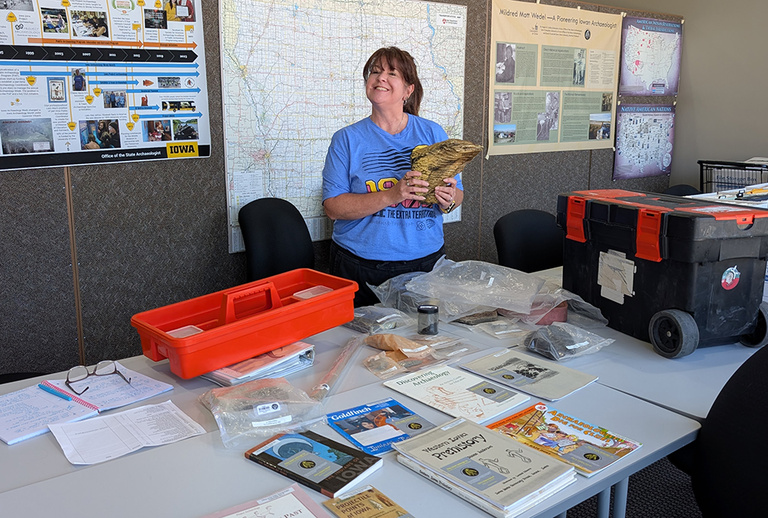
A total of 1765 K–12 students participated in in-person and virtual archaeology presentations and interviews, activities, and tours with OSA staff. Requests for classroom programming came from teachers, after-school groups, homeschool groups, STEM organizations, and robotics teams participating in the 2025-6 international archaeology-themed challenge.
Additionally, OSA reached over 2100 students through rentals of the Iowa Archaeology Discovery Trunks by teachers and nonformal educators.
OSA also participated in the Iowa STEM Teacher Externships Program and hosted middle school science teacher, Jess Hart, who completed a six-week project focused on revising lessons and updating OSA’s Paleoindian time period teaching trunk for greater usability and accessibility for teachers. Jess created several new lessons on Ice Age Iowa.
Bringing Archaeology to Iowa Communities
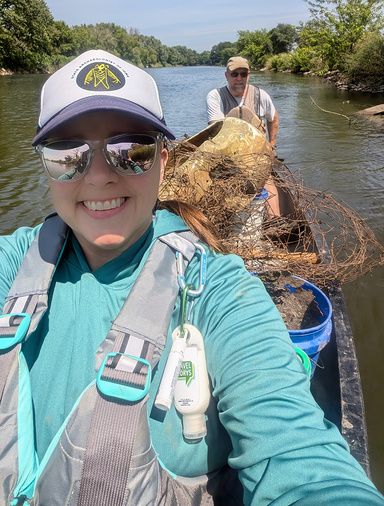
The OSA continues to foster strong relationships with conservation and heritage preservation organizations across the state. OSA participated in its 10th Project AWARE, which involved 263 participants who paddled 53 miles on the Cedar and Shell Rock rivers in north-central Iowa. OSA participated as “resident archaeologists” and assisted with educational programs at the event.
Other events for in-person outreach by OSA staff included several community presentations at libraries across the state for the nationwide Collaborative Summer Library Program’s 2026 “Unearth a Story” theme, the Iowa DOT’s America 250 Scenic Byway Road Trips series, the fall and spring Iowa Archeological Society (IAS) fall and spring meetings and field trips, OSA hybrid Brown Bag talks, and others for multiple county conservation boards, historical and other societies, and museums.
Special Projects
Strategic Initiatives (SI) staff led and partnered on several interpretive, educational, and office projects in FY2026.
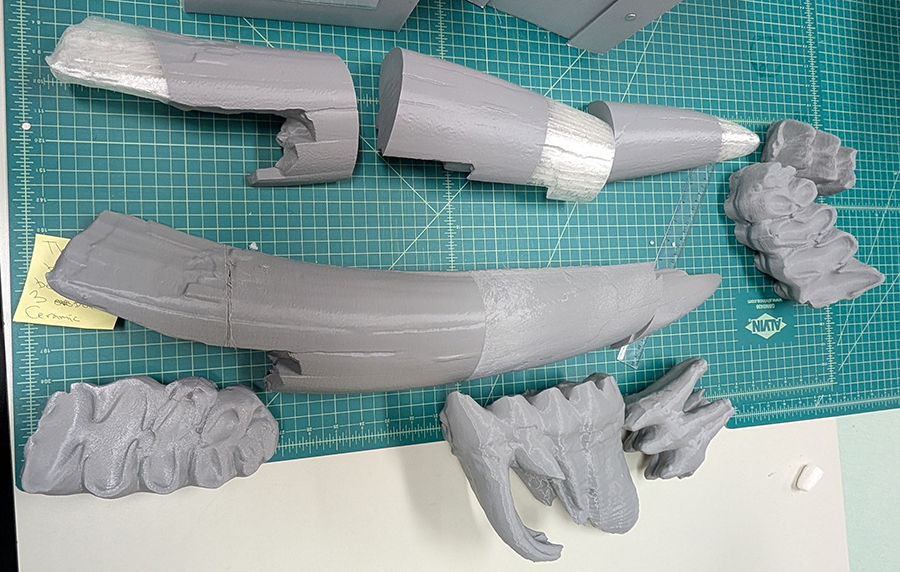
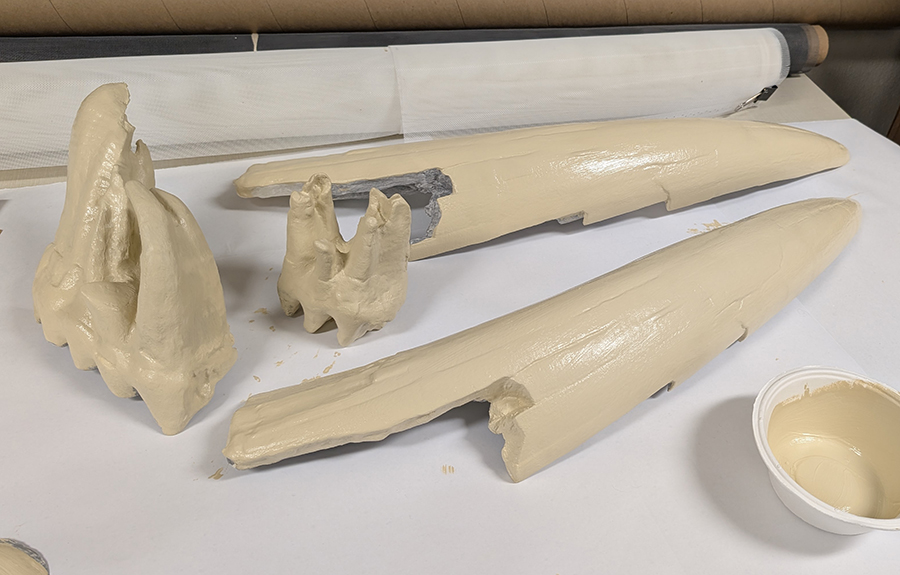
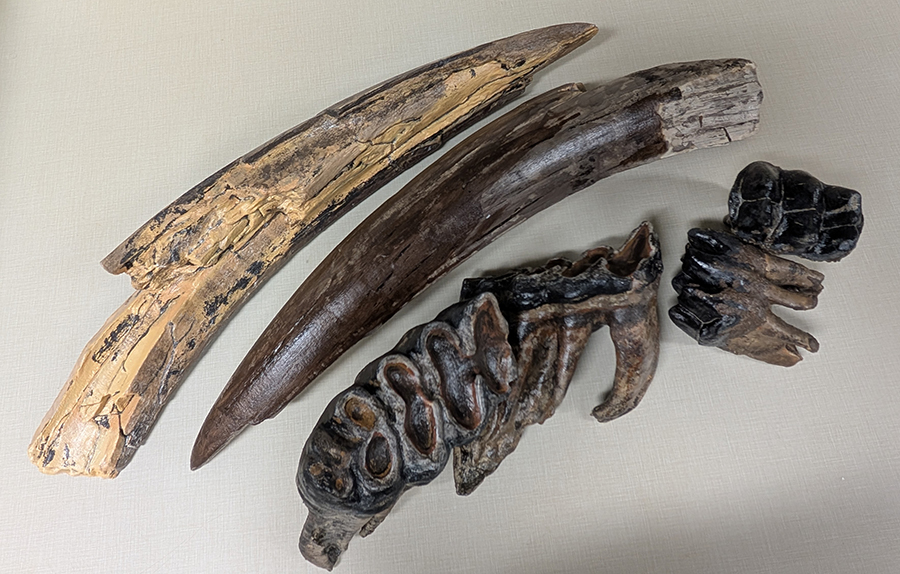
- Elizabeth Reetz created artistic replicas of mastodon bones on 3D prints of a large tooth, small tooth, and tusk fragment. OSA will keep one set for educational purposes, and the other set is gifted to the donor.
- Cherie Haury-Artz, education assistant, led the development of an educational booklet on the Little Sioux River Water Trail with multiple Iowa contributors, to be published in FY2027. The Iowa Department of Natural Resources has included some portions of the booklet content in a website on the Inkpaduta Canoe Trail.
- Reetz led the research design, data collection, and data analysis of the 2025-26 Iowa Archeological Society membership needs assessment and presented the results at the IAS spring meeting in Fort Dodge.
- Reetz continued work on OSA compliance with federal and UI accessibility mandates and coordinated with UI Risk Management (along with Carrie Parris and John Doershuk) regarding policies for volunteers, waivers, and employee roles and responsibilities.
@IOWAARCHAEOLOGY
The OSA website remained a vigorous, interactive conduit between the public and the OSA. The website archaeology.uiowa.edu had 41,160 views by 21,524 users in FY2026. The “UNEARTHED” page created as a resource for the FIRST robotics competition received 5,188 views by 3,101 users.
OSA’s social media pages were an important venue for disseminating news and program information in FY2026. Active social media platforms administered by the OSA include Facebook, Instagram, YouTube, and Bluesky. The Facebook page received nearly 133,500 views, with the most popular post advertising Bill Green’s book tour for This is the Route of my Forefathers: The 1837 Ioway Map. On YouTube, Iowa Archaeology videos reached 771.7 hours of watch time during FY2026.

8,902 followers, up 275

10.8k unique views,
113 new subscribers

1,598 followers

358 followers